Cart
0
You may also like




Why wash your car in the shade? Because direct sunlight can cause water, shampoo, and detailing chemicals to dry too quickly. This increases the risk of water spots, soap residue, streaks, and an uneven finish.
A proper wash is about more than choosing the right products. The environment matters just as much.
Whether you're washing a daily driver or maintaining a carefully detailed vehicle, working on cool surfaces gives you more control over the cleaning process.
In this guide, SAI CHE Detail Co. explains why washing your car in the shade is important, when indoor washing makes sense, and how to achieve a cleaner finish without unnecessary complications.
Washing your car in the shade helps keep exterior surfaces cooler and reduces how quickly water and cleaning solutions evaporate.
When the paint becomes hot, you have less time to apply, work with, and rinse products before they dry.
This can lead to several common detailing problems:
Water spots caused by mineral deposits
Dried shampoo residue on paint and glass
Streaks and uneven cleaning
Cleaning products drying before they can be rinsed
Extra wiping that may increase the risk of wash marks
Shade doesn't eliminate every detailing problem. However, it creates more predictable conditions for a thorough wash.
The goal is simple: keep surfaces cool, use products correctly, and never allow cleaning chemicals to dry on the finish.
Water spots are one of the most common frustrations after washing.
Tap water often contains dissolved minerals, including calcium and magnesium. When water evaporates, those minerals can remain on the surface.
Under direct sunlight, warm body panels can accelerate this process.
Water spots commonly develop when rinse water remains on the surface long enough to evaporate.
They may appear as:
White rings on dark paint
Cloudy deposits on windows
Chalky marks on mirrors
Mineral residue around badges and trim
Some deposits are relatively easy to remove. Others can become stubborn, particularly when left on the finish for extended periods.
Severe water spotting may involve etching that ordinary washing cannot correct.
The best approach is prevention.
Wash on cool panels, rinse thoroughly, and dry the vehicle before standing water evaporates.
A dedicated microfiber drying towel can help remove remaining water without excessive rubbing.
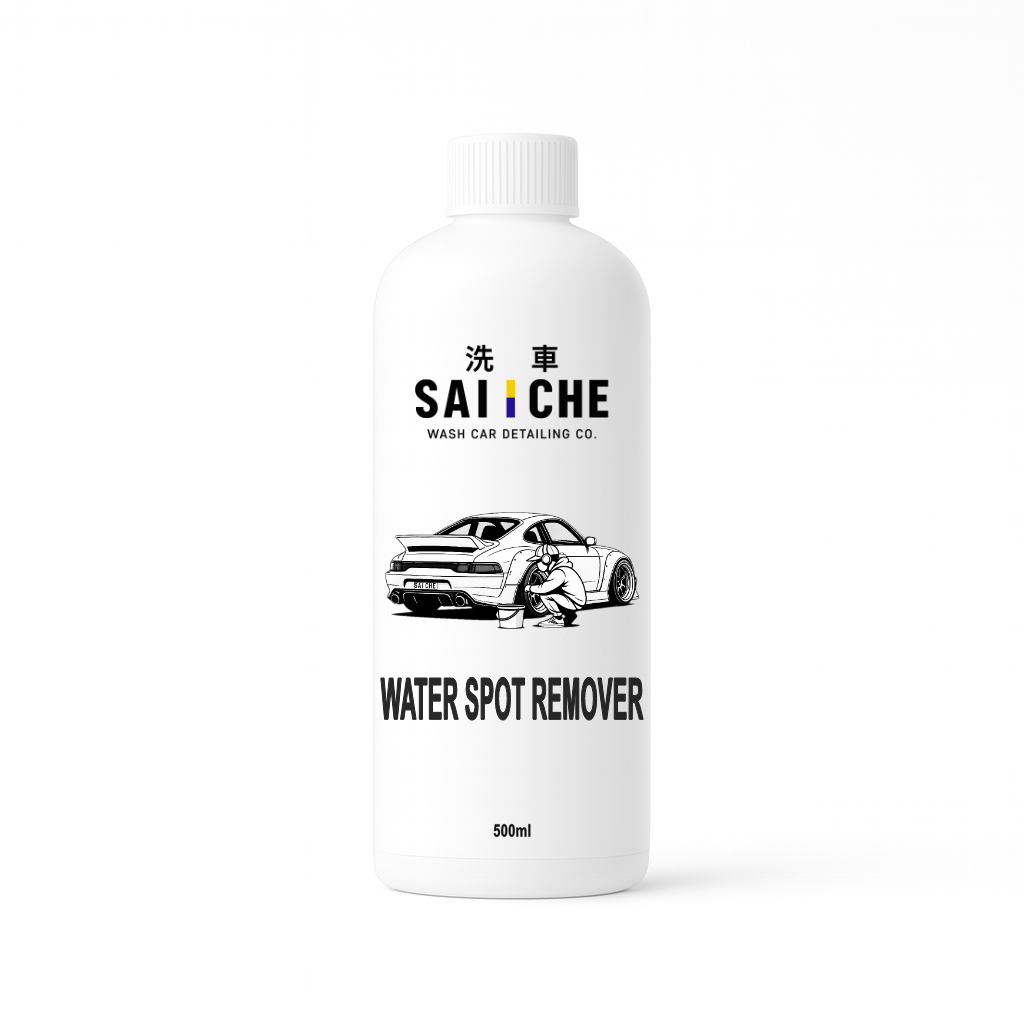
If mineral deposits have already formed, choose an appropriate water spot remover for the affected surface and follow its instructions.
SAI CHE tip: Avoid trying to remove stubborn water spots by aggressively scrubbing the paint. Identify the contamination first.
Another reason to wash your car in the shade is to prevent shampoo from drying prematurely.
Car shampoo is designed to help loosen dirt and provide lubrication during washing.
However, when a cleaning solution dries on a hot surface, it may leave visible residue behind.
This can result in:
Soap streaks
Dull-looking patches
Residue around trim
Additional rinsing
Uneven results on dark finishes
Not completely.
A pH-neutral shampoo can be an excellent choice for routine maintenance, but it can still dry on hot paint.
For regular washing, SAI CHE pH= THICK FOAM provides a high-lubricity, pH-neutral formula designed for maintenance washes and compatible protected finishes.
Its product instructions specifically advise avoiding direct sunlight and preventing foam from drying on the surface.
For more information, read our pH-Neutral Foam Wash Guide.
An appropriately equipped indoor wash bay provides a controlled environment for detailing.
Instead of working against direct sunlight, wind, and changing temperatures, you can concentrate on the washing process.
Indoor washing helps prevent direct solar heating.
Cooler panels give you more time to apply, rinse, and dry cleaning solutions according to their instructions.
Prewash chemicals and shampoos need appropriate working time.
A controlled environment makes it easier to prevent premature drying.
Indoor detailing facilities often use dedicated lighting to reveal dirt, streaks, and missed areas.
This makes it easier to inspect the finish before completing the wash.
Indoor washing can also reduce interruptions from rain, windblown dust, or intense sunshine.
Not every garage is suitable for wet washing.
A proper indoor wash space needs appropriate drainage, ventilation, electrical protection, and safe wastewater management.
Never run an engine inside an enclosed garage.
If your garage isn't equipped for wet washing, a shaded outdoor wash area is a better alternative.
Indoor washing is beneficial when the facility is suitable. Shade and cool panels are the essential advantages.
Prewashing is an important step in reducing unnecessary contact with dirt.
Before using a wash mitt, a suitable prewash can help loosen road film, grime, and other contamination.
This reduces the amount of dirt that needs to be removed through physical contact.
However, applying prewash to hot paint can shorten the time before the product begins drying.
Dwell time is the period during which a cleaning product remains on the surface before rinsing.
Products need enough time to work, but they should never exceed their instructions or be allowed to dry.
For vehicles with heavier road film and oily grime, SAI CHE pH+ PREWASH is designed to loosen contamination before contact washing.
Its published instructions specify applying it to cool surfaces, allowing the recommended dwell time, and rinsing before it dries.
Learn how the stages work together in our guide:
Prewash, Foam & Contact Wash: Safe Car Wash Guide.
Drying is one of the most overlooked stages of detailing.
Even after a thorough wash, leaving rinse water to evaporate can create mineral deposits.
When washing in direct sunlight, the vehicle may begin drying before you've finished rinsing.
Working in the shade gives you more time to complete this stage carefully.
Rinse all shampoo from the surface.
Start drying before standing water evaporates.
Use a clean, dedicated microfiber drying towel.
Work from upper panels toward lower sections.
Avoid dragging a dirty towel across the finish.
Remove trapped water around mirrors, badges, and trim.
Inspect the paint and glass for remaining droplets.
For beginners, our First Proper Car Detail Guide explains how drying fits into a complete maintenance routine.
If an indoor wash bay isn't available, choosing the right time of day can make a major difference.
The best time to wash your car is generally when the body panels are cool and the vehicle is out of direct sunlight.
Morning can be an excellent time to wash, especially before strong sunlight heats the paint.
These can also be good options once the vehicle's exterior has cooled.
Cloud cover can help limit direct solar heating, although panels may still be warm depending on the weather.
A covered outdoor wash bay can provide excellent conditions throughout the day.
Important: A vehicle that has been sitting in direct sunlight may remain hot after being moved into the shade. Allow the panels to cool before applying detailing chemicals.
Following the correct process helps protect the finish and improve your results.
Park in a shaded area or properly equipped indoor wash bay.
Check that the paint, glass, and wheels have cooled.
Rinse away loose dust, sand, and road contamination.
This helps reduce the amount of abrasive dirt present during contact washing.
For heavier traffic film and grime, apply SAI CHE pH+ PREWASH according to the label.
Use the recommended dilution and dwell time.
Never let the product dry.
Use SAI CHE pH= THICK FOAM for a suitable maintenance wash.
For consistent foam application, consider the SAI CHE SS Thick Foam Cannon.
Apply the product according to its directions and rinse when required.
Use a clean wash mitt and suitable shampoo.
Work from the upper panels toward the dirtier lower sections.
Rinse the mitt frequently to avoid reintroducing contamination.
Remove all shampoo from the vehicle.
Pay attention to areas around mirrors, grilles, trim, and badges.
Use a clean microfiber drying towel and remove standing water promptly.
Avoid unnecessary pressure or aggressive wiping.
Check the paint and glass for water spots, streaks, and remaining residue.
A final inspection helps ensure that the washing process is complete.
Yes, but it is generally less forgiving than washing in the shade.
If you must wash in direct sunlight, use extra caution.
Avoid the hottest part of the day.
Allow hot panels to cool before applying chemicals.
Work in small, manageable sections.
Rinse each section promptly.
Never allow shampoo or prewash to dry.
Dry standing water as soon as practical.
If the surface remains too hot to use the product according to its instructions, postpone the wash.
For a broader explanation of washing techniques, see Meguiar's car-care guidance.
Hot surfaces can cause premature drying and residue.
Always check panel temperature first.
Thick foam may look impressive, but leaving it to dry can create unnecessary cleanup.
Follow the recommended dwell time.
On warm days, this can leave shampoo sitting too long on some panels.
Work in smaller sections when necessary.
Mineral-rich water may leave deposits behind.
Dry promptly using a clean microfiber towel.
Excessive pressure can contribute to wash marks, especially when contamination remains on the surface.
Rewash or treat the affected area with an appropriate method instead.
Canadian vehicle owners experience different detailing challenges throughout the year.
In summer, direct sunlight can heat paint and glass, increasing the risk of premature drying.
In winter, road salt, grime, and low temperatures can make exterior maintenance more complicated.
During spring and autumn, changing weather conditions can affect when and where you wash.
For Vancouver and Lower Mainland drivers, choosing a sheltered wash area can help create more consistent conditions.
However, avoid washing in freezing conditions where water may create ice hazards. Always follow local water-use and wastewater-disposal rules.
Washing in the shade helps keep surfaces cooler, reduces rapid evaporation, and lowers the risk of water spots, soap residue, and streaks.
Not every wash in direct sunlight causes damage. However, hot surfaces make it more difficult to prevent shampoo, chemicals, and water from drying prematurely.
A properly equipped indoor wash bay offers more control over lighting, temperature, and weather. A shaded outdoor wash area can also provide excellent results.
Dried shampoo can leave residue and streaks. Depending on the product and surface, you may need to rewet and rinse the affected area using the manufacturer's recommended method.
Shade reduces rapid evaporation but cannot completely prevent water spots. Thorough rinsing and prompt drying are still important.
Early morning or later in the day is often preferable, provided the body panels are cool. A shaded wash bay can also work well during daylight hours.
Yes. Cloudy conditions are often suitable for washing because direct solar heating is reduced. Always check surface temperature and weather conditions.
Yes. Water can leave mineral deposits even without direct sunlight. Proper drying remains an important part of the process.
Understanding why you should wash your car in the shade is a simple but important part of better detailing.
Cooler surfaces give you more control over shampoo, prewash chemicals, rinsing, and drying.
They also help reduce the likelihood of water spots, streaks, and dried residue.
You don't need a professional detailing studio to achieve excellent results. A shaded location, suitable products, clean tools, and careful technique can make a noticeable difference.
Explore SAI CHE Detail Co. for detailing products designed around a more controlled, effective washing process.
SAI | CHE — RESPECT THE PROCESS.