Cart
0
You may also like




Car care products are often marketed as solutions for making a vehicle look cleaner, shinier or more expensive. But their real value goes beyond appearance. The right products help manage the contamination, friction, moisture and environmental exposure that gradually change how a vehicle looks and feels.
Every time you drive, your vehicle interacts with its environment. Road film settles on paint. Brake dust accumulates on wheels. Sunlight reaches interior materials. Water evaporates and leaves mineral deposits behind.
None of these processes happens all at once.
That is what makes vehicle deterioration easy to overlook.
A car rarely goes from pristine to neglected overnight. Instead, small changes accumulate until the paint loses its clarity, interior surfaces look tired and regular washing becomes less effective.
The most useful approach to car care is therefore not simply cleaning what looks dirty.
It is understanding what causes deterioration, which products address those causes, and how to prevent unnecessary damage during maintenance.
Imagine two identical cars purchased on the same day.
Both travel similar distances. Both encounter rain, dust, road grime and changing temperatures.
Five years later, one still has a clean, glossy finish, well-maintained wheels and a tidy interior. The other has dull-looking paint, stubborn contamination, stained surfaces and faded trim.
The difference may not be how often the vehicles were washed.
It may be how they were cared for.
A vehicle's appearance is influenced by several overlapping processes:
Contamination: Dirt, road film, iron fallout, tar and mineral deposits accumulate on exterior surfaces.
Mechanical friction: Improper washing and drying can introduce fine scratches into paint.
Environmental exposure: Sunlight, moisture, heat and road chemicals can contribute to material aging.
Maintenance habits: Allowing contamination to remain for extended periods can make later cleaning more difficult.
Effective car care products address these problems through different cleaning and protection methods.
Understanding those differences is the foundation of a better detailing routine.
Instead of organizing your garage around dozens of bottles, organize your products around five essential functions.
One of the most important principles in automotive detailing is reducing unnecessary contact with contaminated surfaces.
When dirt remains on paint, dragging a wash mitt across it can create friction.
A prewash helps loosen and remove some of that contamination before contact washing begins.
Different formulations are designed for different conditions:
Alkaline prewash: Commonly used to tackle oily road film, grease and traffic grime.
Acidic prewash: Can help address certain mineral and inorganic deposits when appropriate for the surface and product.
pH-neutral shampoo: Commonly used for routine maintenance washing.
The goal is not to use the strongest chemical available.
The goal is to choose the chemistry that suits the contamination.
A lightly dusty weekend car and a winter-driven Canadian commuter may require very different approaches.
Car wash shampoo does more than produce foam.
A properly formulated shampoo helps suspend and remove dirt while providing lubrication during contact washing.
This matters because washing introduces repeated contact between your wash media and the vehicle's finish.
A good maintenance routine uses:
A suitable automotive shampoo
Clean wash mitts
Proper rinsing
Separate tools for heavily contaminated areas
Clean drying towels
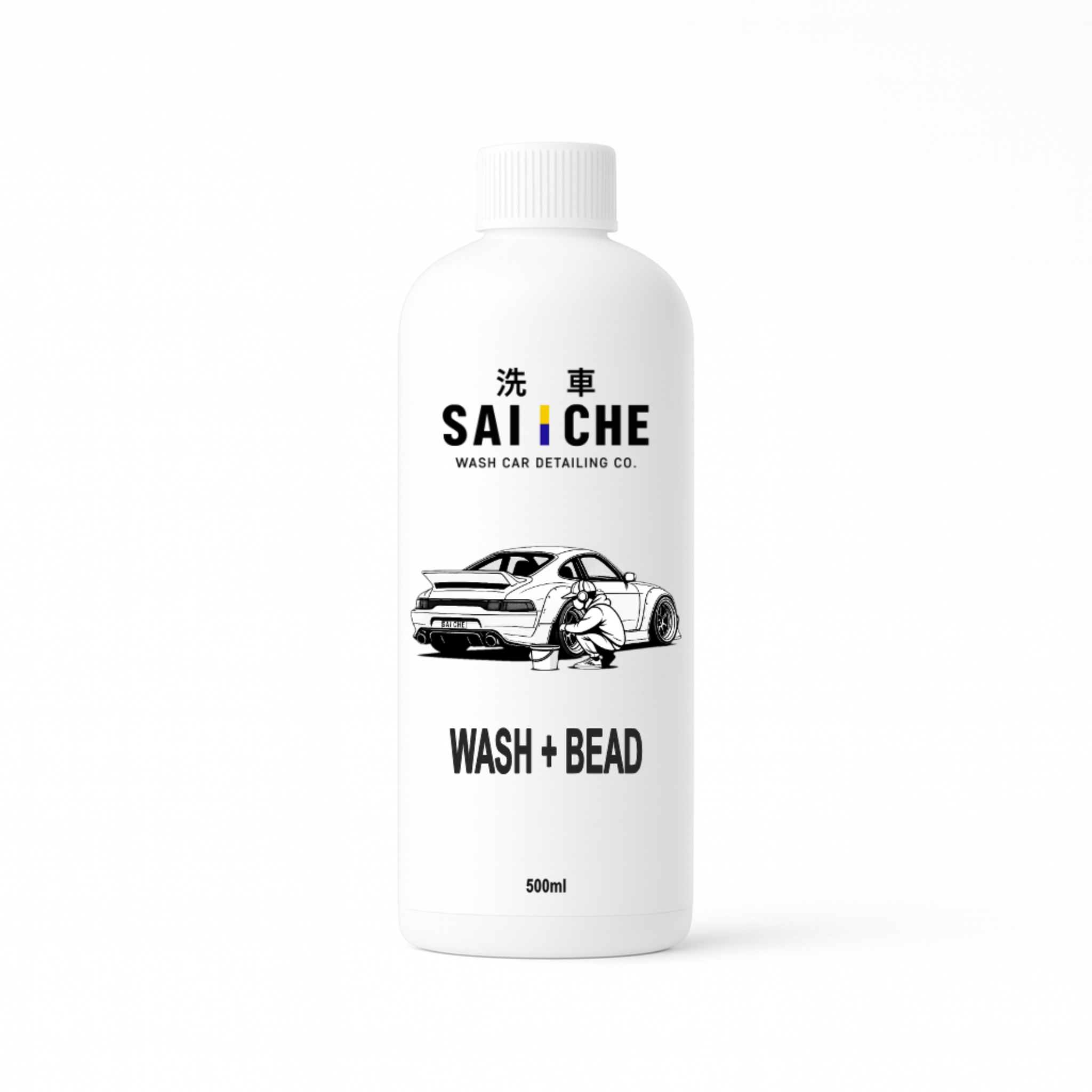
SAI CHE's pH= THICK FOAM fits the traditional maintenance-washing role, while WASH + BEAD combines washing with a hydrophobic finishing effect.
These products serve different purposes.
One emphasizes a conventional maintenance wash; the other adds water-beading performance during the washing process.
Neither eliminates the need for proper washing technique.
A freshly washed car is not necessarily a fully decontaminated car.
Some substances bond to exterior surfaces and remain even after shampooing.
This is where specialized car care products become valuable.
Iron remover
Iron removers target ferrous contamination, including certain brake-dust and industrial-fallout particles.
These contaminants can accumulate on paint and wheels, particularly on frequently driven vehicles.
Tar remover
Tar removers target petroleum-based contamination such as road tar and some adhesive residues.
They address a different problem from iron removers and should not be treated as interchangeable.
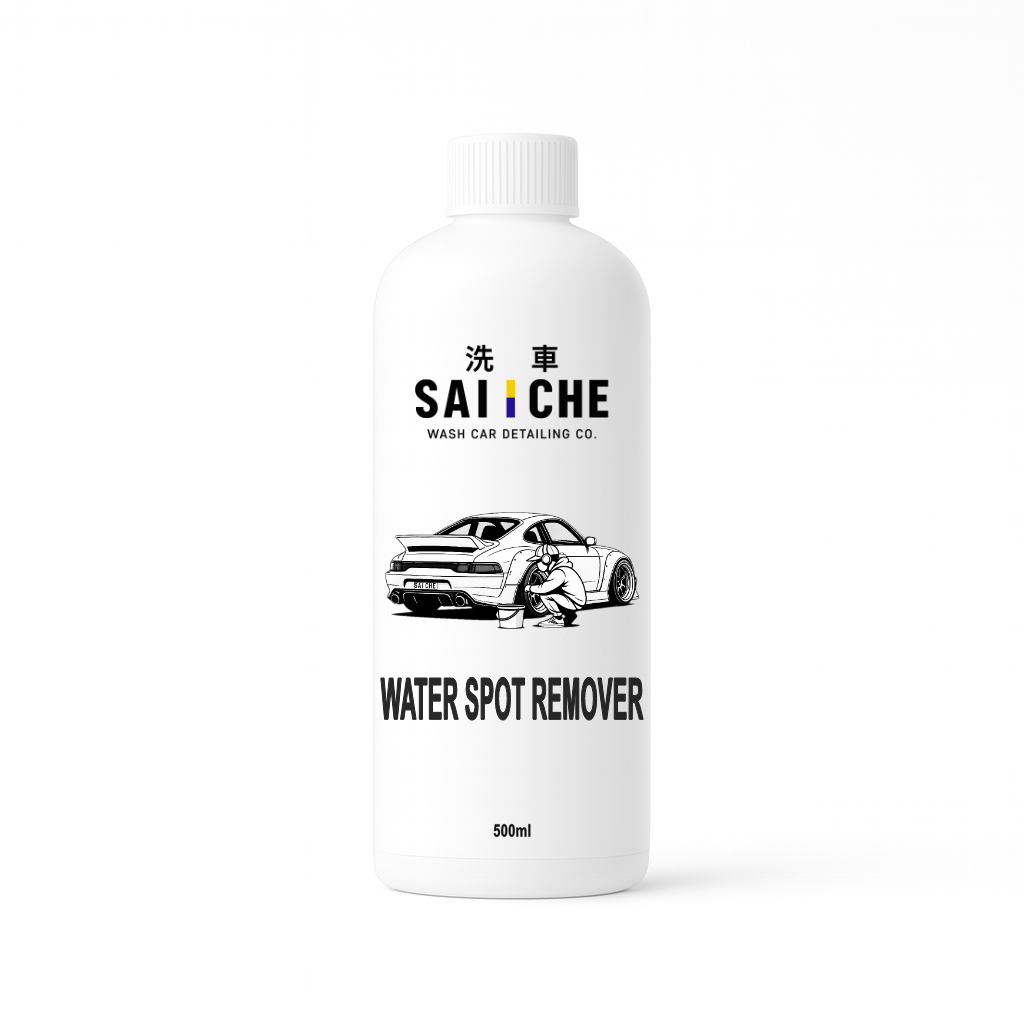
Water spot remover
Water spot removers are designed to address certain mineral deposits left behind when water evaporates.
However, mineral residue and actual surface etching are not the same problem. Etching may require further correction.
Clay bar
Mechanical decontamination can remove some bonded particles that remain after chemical treatment.
Because claying introduces physical contact, it should be used when necessary rather than automatically during every wash.
The important lesson is simple:
Different contamination requires different treatment.
Using one aggressive cleaner for every problem is rarely the most thoughtful approach.
It is tempting to judge cleaning performance by how aggressively a product removes dirt.
But automotive surfaces are made from different materials, each with its own sensitivities.
Paint, clear coat, rubber, plastics, coated leather, glass, wheels and protective films do not necessarily respond identically to the same chemicals.
A product that works effectively on a heavily contaminated tire may be inappropriate for a sensitive interior display.
Likewise, a gentle maintenance shampoo may be excellent for routine washing but ineffective against stubborn road tar.
The best car care products balance several considerations:
Cleaning effectiveness against the intended contamination
Compatibility with the surface being treated
Ease of rinsing or removal
Appropriate lubrication or application method
The frequency with which the product will be used
This is why professional detailing is less about chemical strength and more about controlled cleaning.
The right product performs a specific job without introducing unnecessary risk.
Paint protection is one of the most misunderstood areas of automotive care.
Ceramic coatings, waxes and spray protectants can improve surface properties such as gloss, slickness and water behavior.
But protection does not make a vehicle immune to contamination.
Even a ceramic-coated car can accumulate:
Road film
Brake dust
Mineral deposits
Bird droppings
Insect residue
Environmental fallout
Hydrophobic surfaces can make certain maintenance tasks easier, but water beading is not the same as complete protection against staining or etching.
Not every vehicle needs the same protection system.
Quick detailers and maintenance sprays
Useful for appropriate light finishing tasks and routine appearance maintenance.
Spray waxes and spray protectants
Offer convenient application and added surface protection, with durability varying by formulation and conditions.
Ceramic coatings
Dedicated coatings can provide more persistent protection than many temporary products, but typically require more careful preparation, application and curing.
Within the SAI CHE range, products such as DETAIL SPRAY, WASH + BEAD, NANO GRAPHENE, MACH and MACTUM serve different roles within a vehicle-protection routine.
The correct choice depends on how the car is used, how often it is maintained and how much preparation the owner is willing to undertake.
Protection should support good maintenance habits, not replace them.
Exterior detailing receives much of the attention, but vehicle interiors experience constant contact and environmental exposure.
Steering wheels, door panels, seats, dashboards and consoles collect skin oils, dust, food residue and everyday contamination.
Interior care requires a different approach from exterior washing.
A suitable interior cleaner helps remove everyday grime from compatible cabin surfaces.
For general interior maintenance, SAI CHE INTERIOR+ is positioned for surfaces such as dashboards, trim, vinyl and leatherette.
For more demanding multipurpose cleaning tasks, ALL CLEAN serves a broader cleaning role.
Automotive leather and leatherette require surface-appropriate products and careful application.
SAI CHE LEATHER+ is designed for compatible coated leather, leatherette and vinyl maintenance.
A clean, natural finish is often preferable to excessive shine or residue.
Sunlight and heat exposure can contribute to aging of interior materials.
Interior protectants can complement sensible habits such as shaded parking, windshield sunshades and regular cleaning.
The objective is not to make every surface glossy.
It is to maintain a clean, comfortable cabin while respecting the original materials.
Canadian vehicle owners encounter a particularly wide range of conditions throughout the year.
A summer detailing routine may focus on insect residue, dust, water spots and road trips.
Autumn introduces increased moisture and changing temperatures.
Winter can expose vehicles to road salt, slush, grime and other de-icing materials, depending on the region.
Spring often reveals contamination accumulated over months of difficult driving conditions.
For drivers in British Columbia, frequent rainfall and wet road conditions may make road film and water management important considerations.
For drivers in regions with more aggressive winter salting, underbody rinsing and timely removal of winter grime become especially relevant.
| Season | Common concerns | Maintenance focus |
|---|---|---|
| Spring | Winter grime, road film, fallout | Thorough wash, inspection, targeted decontamination |
| Summer | Insects, dust, water spots | Regular washing, prompt spot cleaning, protection maintenance |
| Autumn | Moisture, leaves, road film | Cleaning, drainage inspection, protection preparation |
| Winter | Salt, slush, heavy grime | Appropriate rinsing, prewashing, regular maintenance |
A useful detailing routine changes with conditions rather than following the same process regardless of the season.
Consumers often compare automotive cleaners by their shelf prices.
But bottle price alone tells you very little about value.
Consider two hypothetical car shampoos:
| Product | Purchase price | Washes per bottle | Cost per wash |
|---|---|---|---|
| Shampoo A | $20 | 10 | $2.00 |
| Shampoo B | $30 | 30 | $1.00 |
Shampoo B costs more upfront but less per wash.
Actual cost per use depends on dilution instructions, application method, required quantity and product performance.
Concentrated professional car care products can provide good value when used correctly.
However, using more product than necessary does not automatically improve cleaning results.
For both enthusiasts and professional detailers, the more useful question is:
How much does this product cost to perform its intended job properly?
A common mistake among new detailing enthusiasts is buying multiple products that perform nearly identical functions.
A better strategy is to create a simple system that covers the essential stages of vehicle care.
| Stage | Product category | SAI CHE example |
|---|---|---|
| Prewash | Contamination-specific prewash | pH+ or pH− PREWASH |
| Contact wash | Automotive shampoo | pH= THICK FOAM |
| Wheels and tires | Wheel and tire cleaner | WHEEL + TIRE CLEANER |
| Decontamination | Targeted contamination remover | IRON REMOVER |
| Drying | Automotive microfiber towel | 1400 GSM or 2000 GSM Drying Towel |
| Interior | Interior surface cleaner | INTERIOR+ |
| Protection | Spray protection or coating | NANO GRAPHENE, MACH or MACTUM |
Not every product is needed at every wash.
For routine maintenance, a shampoo, wash mitt, wheel cleaner, drying towel and basic interior cleaner may be sufficient.
Specialized decontamination and protective treatments can be introduced when conditions justify them.
This keeps car care more manageable and avoids unnecessary chemical use.
Many people assume the appearance of a well-maintained car comes from expensive detailing products or professional equipment.
Those things can help, but they are not the foundation.
Consistency matters more.
A vehicle that receives careful, appropriate maintenance throughout the year may remain easier to clean and more visually appealing than one that undergoes occasional aggressive detailing.
The difference often comes down to small habits:
Removing contamination before it becomes stubborn
Washing with suitable products and clean tools
Drying carefully instead of allowing repeated mineral spotting
Maintaining interior surfaces before heavy buildup develops
Inspecting protective finishes and replenishing protection when needed
These habits do not require an elaborate garage or dozens of chemicals.
They require understanding the process.
Most beginners can start with automotive shampoo, a wash mitt, wheel and tire cleaner, a microfiber drying towel, interior cleaner and glass cleaner. Additional products can be introduced as needed.
Not automatically. Professional products may offer higher concentrations, specialized formulations or commercial packaging, but suitability, correct use and actual performance matter more than the label.
Some products can cause problems when used on incompatible surfaces, at inappropriate concentrations or with improper techniques. Always follow product instructions and test compatibility where appropriate.
Routine washing frequency depends on vehicle use, contamination and environmental conditions. Specialized treatments such as iron removal, claying and polishing should generally be based on actual need rather than performed automatically at every wash.
Not necessarily. Wax and ceramic coatings offer different combinations of durability, application requirements and surface properties. The best option depends on your maintenance preferences and expectations.
A higher price does not guarantee better results. Evaluate cleaning performance, surface compatibility, concentration, ease of use and cost per application.
Useful categories include appropriate prewash cleaners, automotive shampoo, wheel and tire cleaner, drying towels and suitable paint protection. Regular removal of road salt and winter grime is also important.
A vehicle is more than its purchase price, horsepower or badge.
For many owners, it represents years of work, personal milestones, independence and the freedom to go somewhere new.
Taking care of that vehicle is a way of respecting what it means to you.
The best car care products are not necessarily the most expensive, aggressive or complicated.
They are the products that help you care for your vehicle consistently, safely and effectively.
At SAI CHE Detail Co., our philosophy is built around a simple belief:
Respect the Process.
Because pride in what you drive is not defined by what you own.
It is reflected in how you care for it.